
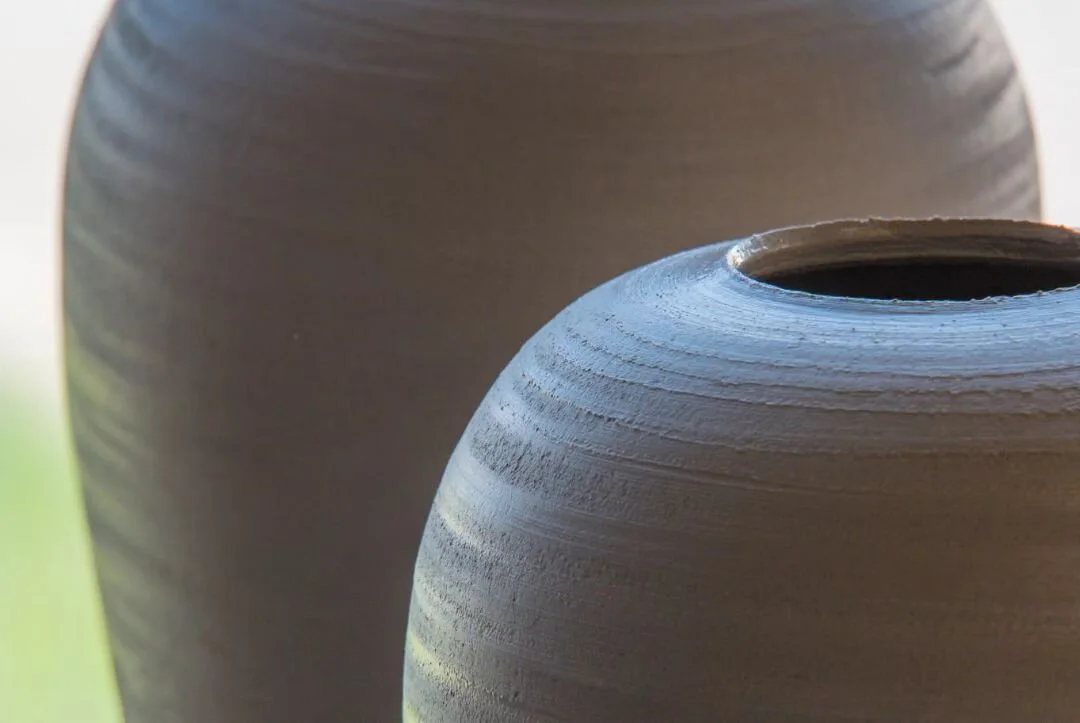
Photos
-
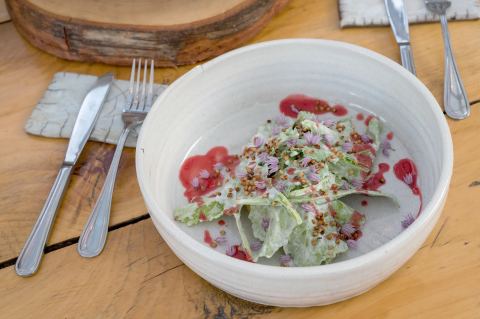 Credit: Photo : Les Ateliers Charlevoix
-
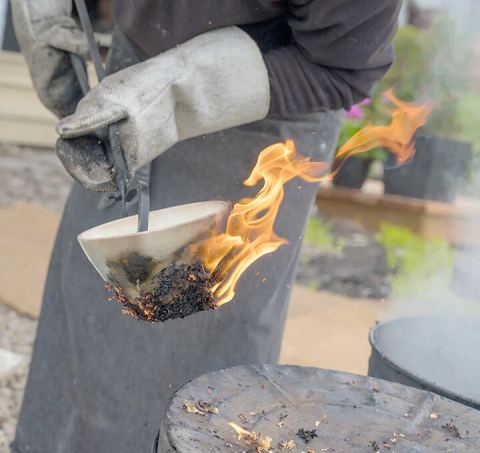 Credit: Photo : Les Ateliers Charlevoix
-
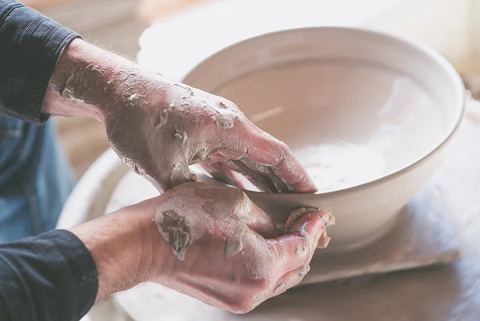 Credit: Photo : Les Ateliers Charlevoix
-
 Credit: Photo : Les Ateliers Charlevoix
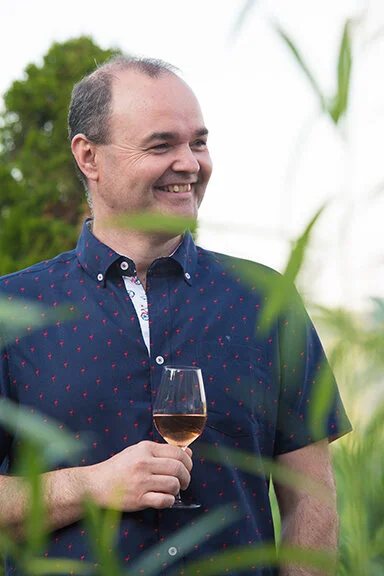
Artisan · Ceramics and pottery
Les Ateliers Charlevoix
Website (opens in a new tab)Instagram (opens in a new tab)Facebook (opens in a new tab)
Other texts
Site, seen Oct 21
That’s where it all started - Charlevoix : a region of Quebec nestled between the majestic St-Lawrence River and a silhouette of rolling mountains. A breathtaking scenery, an accessible beach (though the water is close to freezing point) not to mention a luminescence and silence conducive to artistic creation: music, painting, forge welding, sculpture, hand-blown glass...
Very young, I felt an urge to create. The little boy in me would copy or rather imitate a painter seated in front of his easel in contemplation. With time, it became obvious that I was meant to express myself artistically and destiny led me to a summer job as an apprentice in a pottery workshop located in my village. The workshop was operated by two artists who gradually shared their knowledge with me. The first was Mr. Marc DeBlois, a graduate in design, painter and bas-relief sculptor whose painting style evokes chromatic intensity. Through him, I learned the ropes of marketing a product; from brand imaging to promotion and ultimately developing a relationship with the customer. The second artist, Mrs. Joan Côté DeBlois, who had already acquired 20 years of experience as a potter (recipient of a degree from the Ontario College of Arts), revealed to me the purity of lines, the rudiments of aesthetics, how to design a piece based on its use as well as the fundamentals of pottery making.
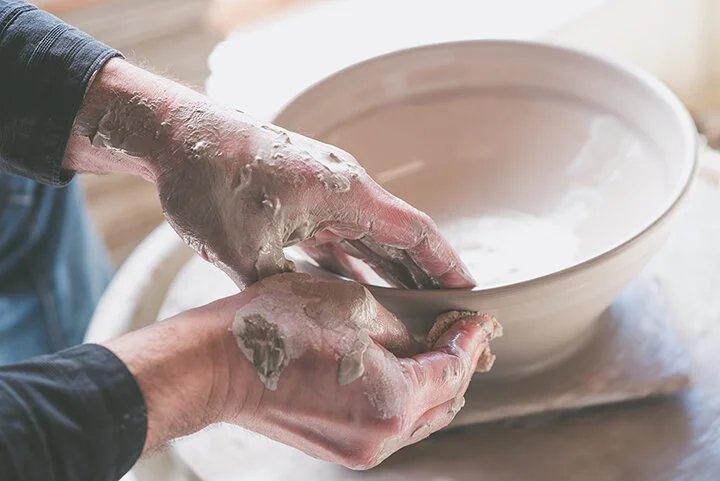
My apprenticeship was arduous for I had to meet the standards of quality upheld by my mentors. It was a stalwart grounding but ever so profitable. My apprenticeship, interestingly, started backwards. Usually, creation starts with the shaping process at the wheel, working the piece step by step up to the final touches. In my case, however, I began by wiping, firing, cooling, and progressed towards glazing. Since it became obvious that I was keen on learning more, Mrs. Côté DeBlois taught me the initial phase, that is, the art of turning.
Turning transformed itself in a fervor whereby I fine-tuned my technique during the long winters sheltered in the heat of the brazen woodstove or that of the pottery kiln. The combination of solace and solitude forged my character as that of being hardworking; much like my mentors. I am not one to base myself on sudden spurts of inspiration followed by lulls waiting for things to happen. I rather think that it is through painstaking work that one can develop one’s potential, that invention leads to striking pieces and that finally determination awards our best results…That is how I was taught and it is a full-proof method for me… Passion is a necessity but it has to be sustained by effort, trial and errors, ingenious ideas combined with creativity, spontaneity and a touch of eccentricity.
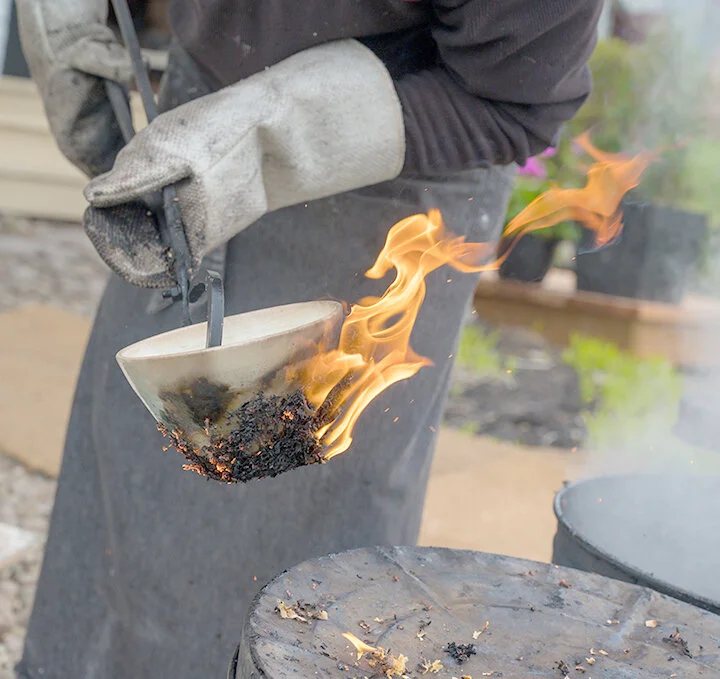
Another summer rolled in and with it a new training process : the apprenticeship of the Japanese traditional art of RAKU. An entirely different technique than that of pottery, this new world was an eye-opener. I was totally blown away by this form of art which was unknown to me. Watching Mrs. Côté DeBlois turn made me forget all the rules that she had taught me. It then dawned on me that turning went beyond your head and hands – it was above all a craft of the heart, for RAKU is first and foremost an intuitive form of art, a question of « feeling ».
From that moment on, I created with that philosophy in mind. The firing process and its effects, the smoking smells and reflections of metal oxides as they succumb to the effect of heat or oxygen, all of it fascinated me. This was inevitably accompanied by burned eyelashes, inflamed lower pant legs and scent-laden hair reminiscent of smoked ham. Throughout the process, I believe that I’ve grasped the marking influence of Mr. Tom Smith, who taught Mrs. Côté DeBlois in Moncton, New-Brunswick : pottery which is sleek yet imperfect, ornamental touches which reveal themselves discreetly to the visitor’s gaze, pure, subdued and refined lines and perhaps unorthodox ways to reach one’s goals.
The creative process involved in Raku differs from that of utilitarian pottery. Raku requires a free spirit, urges, impulses whereas utilitarian pottery is born out of rationality, structure, a cartesian frame of mind. Coming up with a new kitchen item requires research and knowledge of what a customer may find useful; one must try to the object to test its efficiency. Luckily, I love to cook and oftentimes, I challenge myself to find that one object that I can’t do without. With a bit of brain-racking and innovation, I always find two or three new objects to adorn our kitchen collection. All of this with the purpose of interacting with our customers, especially those who think that they have everything but also to keep up with the recent trends and remain at the forefront of the latest needs. It’s important, everything evolves… even pottery!
The business is intricately linked to Charlevoix’s beauty. It has become an inevitable stop for the vacationers who sojourn in this magnificent region. Desirous to remain on the leading-edge, we let our creativity run free and offer our visitors quality products that are unique, aesthetic, useful and affordable.
A truly awe-inspiring reality ! A world between river and mountains that offers all there is to stimulate creativity and gratification.
Site, seen Oct 21
Charlevoix : une région du Québec ou le majestueux fleuve Saint-Laurent rencontre des montagnes rondes et harmonieuses. Des paysages à couper le souffle, une plage accessible (bien que l’eau soit glaciale) et une lumière et un silence propice à la création artistique : musique, peinture, forge, sculpture, verre soufflé...
Enfant, je jouais à copier ou plutôt à imiter les peintres installés devant leurs chevalets. Avec les années, l’envie de créer fit son chemin et je réussi à trouver un emploi d’été dans un atelier de poterie de mon village. J’étais l’apprenti d’une potière qui, à l’époque, possédait déjà vingt ans d’expérience. Mon apprentissage, par contre, commença par la fin. Habituellement, un potier débute sa création par le tour et parachève sa pièce, étape par étape, jusqu’à la touche finale. J’ai plutôt commencé par essuyer, enfourner, défourner, pour ensuite faire l’émaillage. Mais comme je désirais en apprendre toujours plus elle m’enseigna finalement le début : soit l’art du tour.
Deux artistes accomplis m’ont transmis, petit à petit, tout leur savoir. M. Marc DeBlois, diplômé en design, peintre aux couleurs éclatées et sculpteur de bas relief m’enseigna le marketing, la mise en valeur des produits, la relation avec la clientèle, l’image de marque et plus encore. Mme Joan Côté DeBlois de son côté me dévoila la pureté des lignes, l’esthétisme, le design d’une pièce, son utilité et tous les rudiments de la poterie. L’apprentissage fut ardu car le standard de qualité était très élevé… il fallait que mon travail soit à la hauteur. Ce fut une école très difficile mais combien profitable.
Le tour se transforma en une réelle passion et je peaufinais mon art durant les longs hivers à la chaleur du poêle à bois ou à celle des fours à poterie. Dans ce silence et cette solitude je devins semblable à mes mentors : un travaillant. Je ne suis pas de ceux qui croient à l’inspiration soudaine et à l’attente que quelque chose se passe. Je suis plutôt d’avis que c’est en travaillant que l’on développe son potentiel, que c’est à force d’inventer que l’on réussit à produire des pièces magnifiques et que finalement c’est en s’acharnant que l’on obtient nos meilleurs résultats… C’est la méthode qui m’a été enseignée et suis certain que c’est la bonne. La passion oui, mais soutenue par les efforts, les essais, les erreurs, les bons coups, mélangés à de la créativité, de la spontanéité et à une pointe d’excentricité.
Un autre été s’annonça et un nouveau processus de formation s’amorça : l’apprentissage de l’art traditionnel japonais du RAKU. Complètement différent de la poterie, ce nouveau monde me désarçonna. Je n’avais jamais vu pareil travail et j’en fus totalement ébloui. Je regardais Mme DeBlois tourner et j’en oubliais presque toutes les règles qu’elle m’avait enseignées. J’ai compris alors qu’il ne fallait pas tourner seulement avec sa tête et ses mains mais surtout avec son cœur, car le RAKU, c’est une histoire de cœur, de « feeling ».
Je me suis mis alors à créer tout en essayant de m’imprégner de cette philosophie. Les cuissons, les odeurs de fumées, les effets du feu, les reflets des oxydes de métaux qui changeaient sous l’effet de la chaleur et de l’oxygène, tout ça me faisait vibrer. Tout autant que les cils brûlés, le bas de pantalon enflammé ou encore l’odeur du jambon fumé qui imprégnait mes cheveux. J’ai su capter, je crois, les influences marquantes de M. Tom Smith qui enseigna à Mme DeBlois à Moncton, Nouveau-Brunswick . Une poterie soignée mais imparfaite, des artifices discrets mais présents se laissant découvrir dans le regard des visiteurs, des lignes simples, pures et raffinées et parfois des chemins peu orthodoxes pour arriver à ses fins.
La créativité du Raku versus celle de la poterie fonctionnelle est totalement différente. Le Raku demande un esprit libre, des envies, des pulsions tandis que celle de la poterie fonctionnelle demande d’être plus rationnel, structuré, cartésien. Développer un nouvel item pour la cuisine exige de la recherche et la connaissance des besoins des consommateurs, il faut mettre l’article à l’épreuve pour voir s’il rempli bien sa fonction. Par chance, j’aime cuisiner et souvent je me mets au défi de trouver quelque chose qui pourrait simplifier ma vie en cuisine. À force de chercher, d’innover, on réussit toujours à trouver deux ou trois nouveautés à chaque année. Tout cela dans le but d’interagir avec les clients, surtout avec ceux qui croient tout avoir, mais aussi pour se tenir au goût du jour et tenter d’être à l’avant-garde. C’est important; tout évolue… même la poterie!
L’entreprise est intimement liée à la beauté de Charlevoix. Elle est devenue un incontournable pour les villégiateurs qui viennent séjourner dans cette magnifique région. Nous offrons à nos visiteurs des produits de qualité, uniques, esthétiques, utilitaires et abordables. Nous sommes animés par le souci d’être avant-gardiste et ne ménageons pas les efforts pour laisser libre cours à notre créativité.
Quelle belle réalité ! Un monde entre fleuve et montagnes qui a tout pour stimuler la créativité et la joie de vivre.
Upcoming
No upcoming dates in the calendar.
Sources
Where we found what this page says.
